
SERVICE GUIDE · SCAILOUT TEAM
Where do you findoverseas buyers?
Each channel puts you in front of different people
The ways companies look for overseas buyers are fairly well established.
Exhibiting at a trade show, reaching out directly on LinkedIn, sending email, using a government export support programme. Sometimes an introduction comes through a local agent or partner.
Which leads to the obvious question: so which one works best?
Having used several of them, it's hard to say any one is simply better.
The people you meet at a show aren't the people you find on LinkedIn, and with the same company, a conversation that starts by email begins somewhere different from one that starts in person.
So rather than picking a channel first, we start with where the people you need to meet actually are.
What follows is the channels we've used ourselves, and the differences we noticed using them.
The same buyer looks different depending on the channel
| Channel | Strength | Trade-off |
|---|---|---|
| Trade shows | Meet a number of companies in person in a short window | Hard to talk at length on site, and the pool is limited to who attends |
| Reach the individual, not just the company | Numbers drop sharply at every step, from request to reply | |
| Explain in more detail and send material alongside | Finding the address, and whether it lands, are both variables | |
| Agencies and support programmes | Event participation and buyer matching come together | The companies and the schedule are set by the programme |
| Local partners | Use a local network and local market knowledge | Finding a partner worth working with takes time in itself |
The table reads like a list of pros and cons, but what matters more is which channel you use when.
You can't give a long product explanation to someone you've only just introduced yourself to at a booth. With someone you've already exchanged messages with on LinkedIn or by email, the on-site conversation starts somewhere far more specific.
Trade shows give you numbers, not long conversations
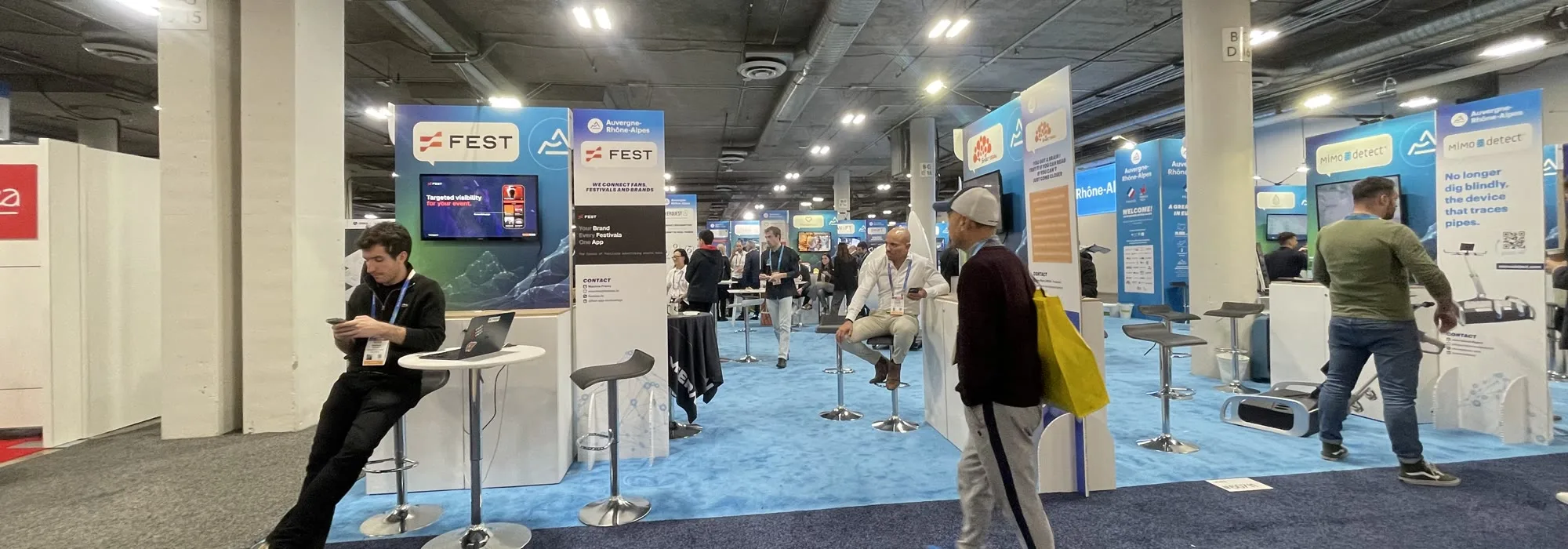
The real strength of a trade show is meeting people in person.
You can see several companies in a day, and if you have a product, show it there and then.
On site, though, there's less time than you'd expect.
Often it's a quick introduction and a business card before the next person arrives, and the other side is working through their own schedule too.
So we contact whoever we can before the show.
On site, time goes to the meetings already booked and the people we've already spoken with, rather than starting from a product introduction.
A team we worked with at MWC 2026 ran it the same way.
| Stage | Record |
|---|---|
| Total targets | 1,136 |
| Booths visited on site | 128 |
| Booth meetings confirmed on site | 6 |
| Video calls after returning | 5 |
| NDA requests | 1 |
Six meetings were confirmed on site, and five video calls followed after the trip.
Meeting at the show matters, but the discussion only really starts when the next contact follows.
LinkedIn lets you pick the person
LinkedIn is more useful for finding people than companies.
Within one company, business development, technical and procurement contacts can care about completely different things.
On LinkedIn you can choose which of them to approach first.
The drop-off along the way is steeper than expected, though.
Here is how it went for a 3D AI team at VivaTech 2026.
| Stage | Record |
|---|---|
| Exhibitors and local companies reviewed | 573 |
| LinkedIn connection requests | 291 |
| Accepted | 59 |
| Replied | 4 |
| Meetings | 3 |
291 connection requests led to 3 meetings.
On the numbers alone that looks small.
But these three weren't chance encounters on the show floor. They were conversations started before the show, with the time already booked.
Which is why, on LinkedIn, who you pick at the start matters more than how many you send.
In practice the channels run together
Shows, LinkedIn and email rarely move separately.
They usually feed into each other.
We start from exhibitors and local companies, then find the contact on LinkedIn.
Reach out, book the meeting, meet on site, then pick it up again by email or video call once back.
So the question is less which channel is best and more where each channel fits.
A single contact almost never closes anything.
What we check before using a channel
There are a few things we look at before trying a new channel.
Whether the people you want to meet are actually there. Whether you can get to a named contact, not just a company name. How far a first conversation can go.
And one more.
Can you contact that person again?
Meeting once on site and being able to pick it up again by email or LinkedIn are very different things.
For channels we haven't run much ourselves — agency programmes, trade platforms — the same test makes them easier to compare.
Frequently asked before a first call
We're starting overseas sales for the first time. Which channel should we look at first?
It's usually faster to start from where the people you need to meet are, rather than from the channel. If you already have business cards or a record of past contact, that's a fine place to begin.
How many LinkedIn connection requests should we send?
There's no set number. At VivaTech 2026, 573 companies were reviewed, 291 connection requests were sent and 3 meetings were booked. Who you pick at the start changes the outcome more than how many you send. How those targets are chosen is set out in There are hundreds of exhibitors — who should you actually meet?.
What about agency programmes and trade platforms?
We haven't run those channels enough ourselves to tell you how well they work. What does help is checking whether you can reach a named contact, and whether you can contact that person again afterwards.
Before looking for a new channel, start with the list you already have
You don't have to start from a new channel.
There may be business cards from a previous show, or LinkedIn connections you never followed up.
There may be companies you emailed once and never heard back from.
All of that is a target list you can go back to.
Just sorting out who was contacted, what came back and where the conversation stopped is often enough to show where to pick it up.
What we take on before and after a show is set out on our exhibitions page, and pricing and how we prepare are on the show preparation guide.
Before adding a new channel, it's worth checking who you've contacted so far and where those conversations stopped.
It's your turn
Curious how these results came about?
Let's turn your next trip into a schedule that leads somewhere