
SERVICE GUIDE · SCAILOUT TEAM
From deciding who to meet abroadto knowing what comes next
What Scailout handles before, during, and after an overseas trade show
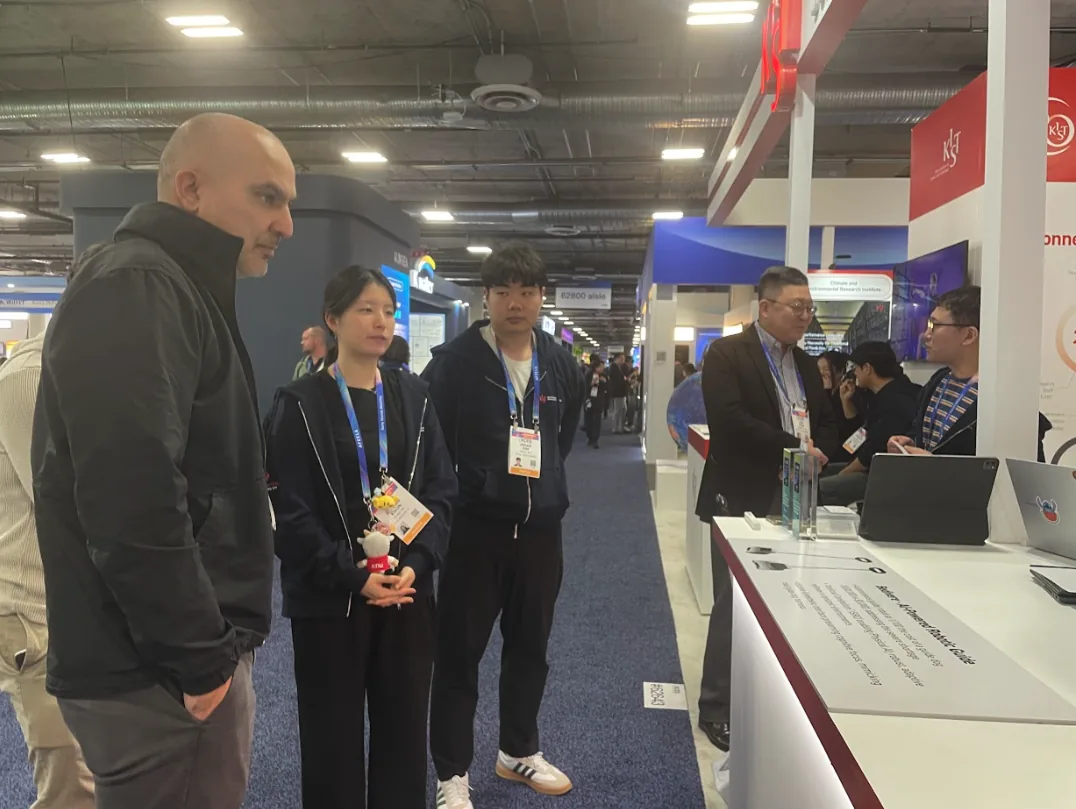
At CES 2026, one of the teams we worked with had only two people on site — the founder and a developer — running the booth themselves.
The problem was that neither could step away for long. Visitors kept coming during the day, and the evenings were already booked.
But a trade show isn't only about the booth.
You have to decide who from today is worth contacting again, look into companies you have just come across, and work out who to meet and which booths to visit the next day.
We brought in a local Korean talent who helped with lead organisation, looked up additional companies worth meeting, and sorted out who to follow up with. Meetings arranged before the show ran separately alongside that.
Scailout at CES 2026 — field recordThe list you build beforehand rarely survives the floor
That was true at CES too.
Some companies responded better than expected, while others turned out to be a poor fit once we actually met them. New teams worth seeing came up on site that were never on the original list.
Even with thorough preparation, we had to keep re-deciding on the spot.
Who to contact again from the people met today, which booth to visit first tomorrow, which meeting deserves more time.
A venue being large does not mean you can cover all of it.
So we don't just collect company names and contact details.
We also record why we wanted to see that company, who we spoke with, what came up in the conversation, and what needs checking next.
That is what makes it possible to re-judge when the plan changes on site.
What we check before building the list
We don't start by pulling together a hundred or two hundred companies.
We start by working out who you want to meet on this trip and what you want to come back with.
Some teams want to test market reaction. Others want to meet customers who could realistically adopt the product. Some are looking for distribution or local partners.
Different goals mean different people to meet.
So when we look at exhibitors and expected visitors, we don't just check whether the industry matches.
- why this company would have a reason to look at your product
- who you should actually be contacting
- whether now is a sensible time to reach out
That much we confirm together as a baseline.
Then we reach out by email or LinkedIn and watch what comes back.
Once a meeting is set, there is one more thing to prepare.
So what exactly are we trying to find out by meeting this person?
What problem they have and what they are after, what role the person in front of you actually plays in the review process, and what you still need to know to move to the next step.
That is what we research most before a meeting.
Collecting business cards is not the goal in itself.
A first meeting rarely goes straight to a PoC or a purchase decision. If the product or message is still being shaped, it may be a conversation about market reaction instead.
Even then, you should walk in knowing what you want to confirm.
The moment a meeting ends, the next task appears
Say the person asks you to send over product material.
If you only log "send materials" in a CRM, a few days later you will struggle to remember why they asked.
It helps to also note which feature they were interested in, whether there were technical questions, and who internally needs to review it with them.
That is what lets the conversation continue after you are back.
You can then decide who to send material to, who to ask one more question, and where to put forward a proposal.
The STEP 01–06 we use at Scailout follows the same flow.
| Stage | What we do | What it leaves for the next step |
|---|---|---|
| STEP 01 · Where to go | Review trip goals and shortlist trade shows and industry events | Who to meet this time and what to confirm |
| STEP 02 · Who to meet | Research exhibitors and expected visitors, set priorities | The companies and contacts to approach first |
| STEP 03 · Pre-attach | Reach out in advance by email, LinkedIn and other channels | Their response and what to confirm in the meeting |
| STEP 04 · Meet & Capture | Run on-site meetings and record the conversation | Needs, review conditions, next actions |
| STEP 05 · Next Action | Send material, ask follow-up questions, make proposals | Status of each lead |
| STEP 06 · Feedback Loop | Feed results into the next market, target and message | The basis for the next round |
Before the trip, you decide who to see and reach out first.
On site, you keep adjusting priorities as you actually meet people.
After you are back, you pick those conversations up again.
At Scailout we don't treat these three phases separately — we run them as one flow.
That said, we don't make every decision for you
What we do is closer to keeping the information organised so you can make those calls. Which company matters most, what terms to propose, and whether to go ahead with a partnership are decisions the client makes.
So at the start we look at your product one-pager, demo video, company deck, pricing and references.
You need to understand the product reasonably well to find the right companies and the right people.
From the trip onwards, we review new leads together, adjust priorities and update the actions that follow.
When the engagement ends, we hand over the target list, contacts, outreach history, meeting records and next actions.
Everything can be downloaded as CSV or XLS and carried into whatever you do next.
We don't take on everything around a trade show
This is where clients often get confused.
What Scailout takes on is not overall show operations such as booth construction or shipping exhibits.
The local talent who helped with booth support at CES was arranged separately for that project. It is not part of every engagement by default.
Tell us what kind of help you need before the trip and we will lay out what we can cover.
You can work with us for one trip, or keep going after it
Scailout currently runs in two formats: Project and Pipeline.
Scailout Project is a two-month engagement for when the dates and goals are already fixed — a specific trade show or overseas trip.
It covers everything from deciding which market and event to look at, through target research, pre-event outreach and on-site meetings, to the follow-up afterwards.
When the project closes, we write up the results and what to do next in a Closeout report.
Scailout Pipeline is for teams that already have an overseas market in view and need to keep finding new targets or maintaining relationships with people they have already met.
It runs in minimum six-month cycles and covers follow-up on existing leads, new target research, meetings, weekly reviews, monthly plans and quarterly trip planning.
If you already have business cards or contacts from overseas, those are a fine place to start.
We organise when you met, what was last discussed and whether it is worth reaching out again, then set the next action from there.
Pricing as stated in our deck is below.
| Scailout Project | Scailout Pipeline | |
|---|---|---|
| Duration | 2 months | Monthly subscription (6 months minimum) |
| Price | From KRW 5,000,000 | From KRW 2,000,000 / month |
| Success fee | 10–30% (up to 6 months after the show) | 5–10% (agreed per outcome) |
| Reporting | Closeout report | Monthly review and next month's plan |
Actual cost and success fee depend on the scope you need.
VAT, trip expenses and how the success fee is calculated are all confirmed before contract.
Frequently asked before a first call
Can we use this for a general overseas trip rather than a trade show?
Yes. If the trip has a clear purpose — buyer meetings, partnership discussions, local market research — the same approach applies. We shape who to meet and how to prepare around that purpose.
Our product and messaging aren't finalised yet. Is that a problem?
At that stage, meetings are better framed around market reaction and customer needs than around adoption. We start by deciding together what you want to confirm and come back with.
Can you work with overseas companies we met previously?
Yes. If you already have companies and contacts, we start by organising the previous conversations, then check whether it makes sense to reach out again and whether any follow-up is still open.
If there's something you can't handle yourself on the next trip
Preparing for an overseas show or trip tends to run into the same problem.
On site you have to explain the product and meet people, while at the same time finding who to meet next.
And there are still the people you have already met to get back to.
If you have an event or trip coming up, you can start simply by telling us which teams you would like to meet.
If there are companies you are already in touch with, we can look at that list together.
It's your turn
Curious how these results came about?
Let's turn your next trip into a schedule that leads somewhere