
SERVICE GUIDE · SCAILOUT TEAM
There are hundreds of exhibitors —who should you actually meet?
What we do once the exhibitor list arrives
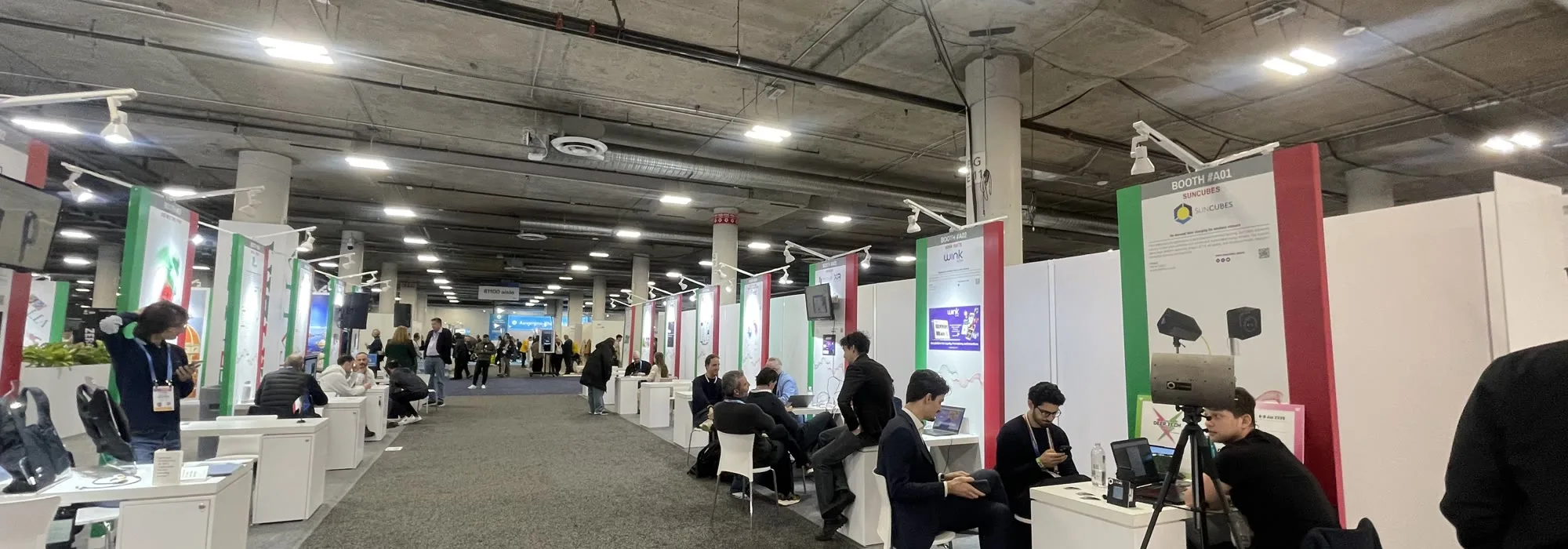
When you exhibit at a large show like CES, the exhibitor list is usually the first thing you open.
The problem is how long it is.
Hundreds of companies come up at once, and filtering by sector still leaves a lot. Meeting all of them during the show isn't realistic.
So once the list arrives, we start by working out which companies are actually worth meeting at this show.
Collecting a large number of companies matters less than narrowing down to the ones that fit your product and your market.
We start with the product and the market
There's no straight answer to "which CES exhibitors are good targets".
The same exhibitor list points to different companies depending on who is looking at it.
A team with a payments product might look at finance and payment infrastructure. A team building robotics or manufacturing solutions ends up with a completely different set.
So before opening the exhibitor list, we go through the product and the market first.
- Where the product is actually used
- Which companies are likely to need it
- Which companies play that role in the market you're entering
Once that is settled, the companies to look at first start to surface in the list.
Not every exhibitor is judged the same way
Exhibitors aren't all assessed against the same standard.
Some could become customers directly. Some aren't customers themselves but could turn into a supply or partnership relationship. Others — agencies, associations — can open up connections to other companies.
The criteria shift from project to project, but the split usually looks like this.
| Tier | What it covers |
|---|---|
| Primary target | Companies that could evaluate your product or technology directly |
| Secondary target | Not customers themselves, but could connect through supply or partnership |
| Partner target | Agencies, associations and partners that can lead to other companies |
In practice it looks like this.
| Client type | Primary target | Secondary target |
|---|---|---|
| Digital identity and e-signature | DID, eKYC, e-signature and credential verification companies | Stablecoin, wallet and cross-border payment companies that need the underlying infrastructure |
| Materials process inspection equipment | Cell and electrode manufacturers working directly with electrode slurry | Battery production equipment and quality control companies |
| 3D AI | Humanoid and embodied AI companies | Adjacent robotics companies |
This isn't a sector table applied as it comes.
We look at where the product is actually used first, then find the companies that match.
Some companies look relevant and still rank low
When you're building a list, anything that looks even slightly relevant tends to get added.
The list grows quickly that way.
The problem is that the more companies on it, the harder it gets to decide who to contact first.
So the lower-priority ones are marked separately from the start.
- Direct competitors solving the same problem a different way
- Companies in a similar sector where the product is unlikely to fit
- Companies outside the market or region currently in scope
Whether there's a real reason to sit down and talk matters more than whether a company looks relevant.
The exhibitor list alone isn't enough to start reaching out
Having the exhibitor list sorted doesn't mean outreach can start.
First we also look at companies likely to be on site without exhibiting.
Procurement and partnership people often attend as visitors rather than taking a booth.
So alongside the exhibitors, we look for local companies and likely attendees based on the timing and location of the show.
And in the end, outreach goes to a person, not a company.
Within the same company, the reply changes depending on who you contact.
So when we pick a company, we find the person to contact inside it at the same time.
Pre-show outreach only starts once that is in place.
At VivaTech we reviewed 573 companies and contacted 291 people
The record from a 3D AI team we worked with at VivaTech 2026.
| Stage | Record |
|---|---|
| Exhibitors and local companies reviewed | 573 |
| LinkedIn connection requests | 291 |
| Accepted | 59 |
| Replied | 4 |
| Meetings | 3 |
573 companies were reviewed, but not all of them were contacted.
From those, 291 people worth approaching first were picked, and LinkedIn connection requests went out.
59 accepted, 4 replied, and 3 meetings were booked.
MWC 2026 ran much the same way.
1,136 companies were reviewed in total and 128 booths were visited on site. Six of those meetings had been booked in advance.
The gap between the number reviewed and the number actually met is normal.
What matters isn't how many you review, but how you decide who to look at first.
Frequently asked before a first call
Where does the exhibitor list come from?
We work from the exhibitor list published by the show organiser. How much is published, and when, varies by show. So we don't stop at the companies on that list — we also look for local companies and likely visitors based on the timing and location of the event.
How many companies should the list be narrowed to?
There's no set number. At VivaTech 2026, 573 companies were reviewed, 291 people were contacted and 3 meetings were booked. It depends on the size of the show, the schedule, and how many people are going.
How do you find the right contact at a company on the list?
We decide which role to approach before looking for a name. Within the same company, business development, technical and procurement contacts care about different things. How we approach each channel is set out in Where do you find overseas buyers?.
If you already have the list, that's a fine place to start
If the exhibitor list is already in hand, we can start there.
A product deck and a sense of the customer type you want to meet is usually enough to work out which companies to look at first.
Overseas companies you've contacted before, or business cards from previous shows, can go in as well.
Companies you've already had contact with can be approached differently from ones you're seeing for the first time.
What we take on before and after a show is set out on our exhibitions page, and pricing and how we prepare are on the show preparation guide.
Will exhibiting at VivaTech get you in front of European customers? goes through how those 573 companies were narrowed down to the people actually contacted.
A long exhibitor list doesn't make meeting a lot of them the goal.
Finding the companies worth talking to at this show, and deciding who to contact inside them, comes first.
It's your turn
Curious how these results came about?
Let's turn your next trip into a schedule that leads somewhere